Course
Health / Science
Undergraduate

Chemistry I

4 credit hours

Credits awarded upon completion

Live Instructor

Progress at a recommended pace

180 hours

Estimated learning time

About the Course

Description

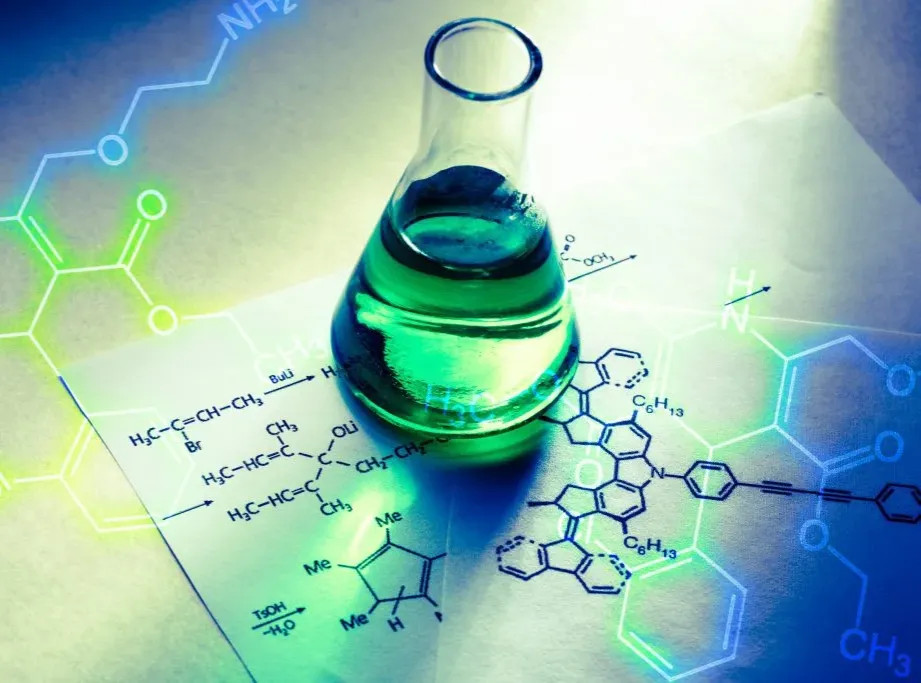
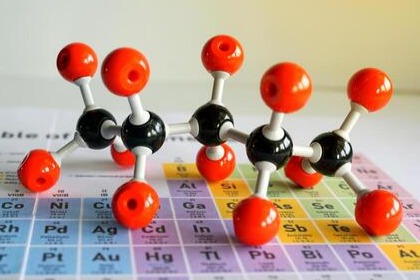
The course begins with a study of measurement and matter. An introduction to atomic theory follows. Mass relationships in chemical reactions are introduced, followed by the study of chemical reactions in aqueous solutions. The gas laws are then covered, followed by an introduction to thermodynamics. Concepts of chemical bonding are studied along with periodic relationships among the elements. Quantum theory is used to explain the electronic structure of atoms. Laboratory experiments complement the material covered in lectures. The laboratory experiments are designed to introduce methods, materials, and equipment of chemistry as well as to illustrate important chemical principles.  Online lab component included.

Topics

  • Topics include: 1. Introduction to Chemistry Scientific method Classification of matter Physical vs. chemical properties/changes Units of measurement and dimensional analysis 2. Atomic Structure Subatomic particles Atomic number, mass number, isotopes Atomic theory Quantum theory Electron structure 3. Periodic Table & Periodicity Organization of the periodic table Periodic trends: Atomic radius Ionization energy Electron affinity Electronegativity 4. Chemical Bonding Ionic vs. covalent bonding Resonance and formal charge VSEPR theory and molecular geometry Polarity of molecules Basics of intermolecular forces 5. Stoichiometry The mole concept Molar mass Empirical and molecular formulas Balanced chemical equations Stoichiometry calculations (mass–mass, mole–mole, etc.) 6. Chemical Reactions Types of reactions (combustion, synthesis, decomposition, redox, etc.) Predicting products of reactions Limiting reactant and percent yield 7. Thermodynamics Heat, work, and energy First law of thermodynamics (conceptual) Calorimetry Hess’s law 8. Gases Gas laws Gas mixtures and partial pressures Kinetic molecular theory Real vs. ideal gases 9. Solutions & Concentrations Solubility basics Types of solutions Electrolytes vs. nonelectrolytes Concentration units (molarity, molality, percent solutions) 10. Fundamentals of Acids & Bases Arrhenius, Brønsted-Lowry definitions pH and pOH Strong vs. weak acids/bases (conceptually) 11. States of Matter Solids, liquids, gases Phase changes Heating curves

Content Material Titles

  • OpenStax 2e Chemistry (OER)

Sections

Schedule

Asynchronous

Delivery method

Online

Deliverables

  • 4 Credits

    Academic Excellence

    Earn necessary number of credit hours for completing this content

Outcomes

Upon successful completion of the course, the student should be able to: 

Describe atomic structure, isotopes, and periodic trends in chemical and physical properties. 

Use the mole concept to relate mass, particles, and chemical quantities. 

Balance chemical equations and perform stoichiometric calculations. 

Calculate solution concentrations and perform dilution and reaction-related molarity calculations. 

Analyze energy changes using thermochemical equations and calorimetry principles. 

Draw Lewis structures and predict molecular shapes using VSEPR theory. 

Explain chemical bonding and polarity in molecules and compounds. 

Apply dimensional analysis and significant figures in chemical problem-solving.
Outcomes Image